
TRUSTED PLUMBING SERVICES
Reliable Plumbing Solutions for Homes
At Arlington Local Plumbing, we provide dependable plumbing repairs, installations, and maintenance for homes. From clogged drains and leaking pipes to water heaters, fixtures, and emergency plumbing, our team is ready to help keep your system working properly.
Professional Service
Reliable plumbing help you can count on.
Quality Workmanship
Repairs and installations built to last.
Skilled Team
Experienced plumbers ready to help.
A plumber in Arlington who already knows your street
When a faucet will not quit, a drain backs up, or the hot water heater goes quiet, you want a plumber in Arlington, TX who already knows how this house was built. Arlington Local Plumbing helps homes and businesses in houses, townhomes, condos, and businesses with the water, the drains, and the line to the street. We handle emergency plumbing, water heater repair, drain cleaning, pipe repair, fixture installation, and garbage disposal repair without turning the visit into a lecture.
Newer production houses sit one direction from the older core around Center Street. You drink the same city water, but the pipe in the wall is a different decade. We often know the housing type from the street name in 76015 and still confirm it on site before we open anything.
We test before we cut, and we leave the house swept with the valves labeled. We take calls 24/7, including nights when a slab is wet or a supply line splits after hours. That is how a visit starts on these streets, and the next part walks through the call, the tests, and the repair so you know what the day looks like.
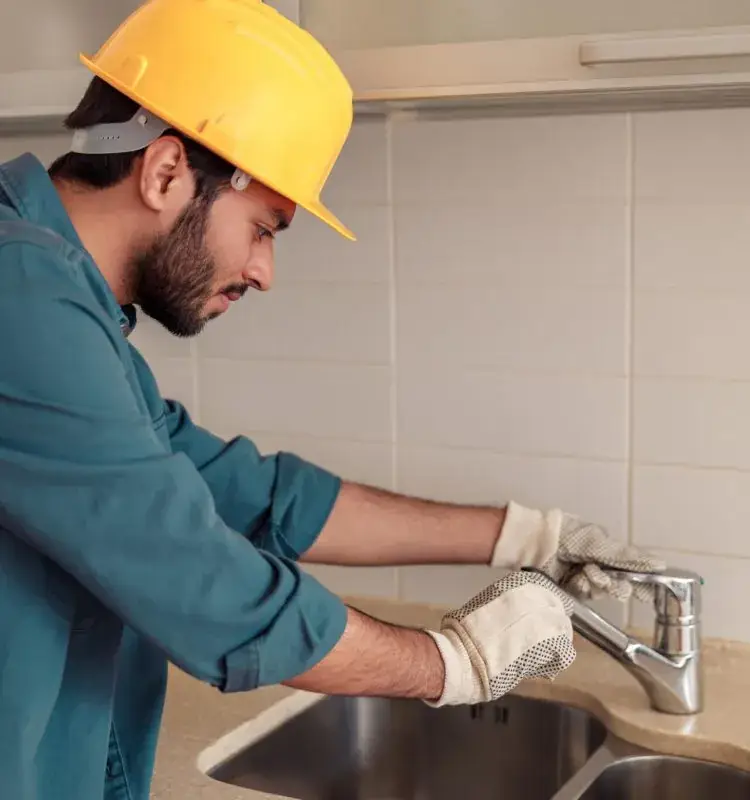

About Us
Experienced Plumbers Delivering Reliable Service
We provide dependable plumbing solutions backed by quality workmanship and professional service. From repairs and installations to routine maintenance, our team is committed to keeping your plumbing system working efficiently.
Reliable plumbing solutions designed for long-term performance and everyday peace of mind.
- Quality Plumbing Work
- Dependable Service
- Skilled Plumbing Team
How a visit goes when we already know the house
You reach out
Send the street, the decade if you know it, and what you see: a wet patch, a dead heater, or a drain that will not drop. Photos of the meter, the water heater closet, and the stain help us load the right cutters and fittings. We treat a spinning meter or a ceiling drip as the reason to come now, not later in the week.
We set a time to be there
Once we have the address, we pick a window that matches the problem, including nights and weekends. A burst line or a sewer backup does not wait for weekday hours. You get a time, a description of who is coming, and a short list of what to shut off if water is still moving.
We test and explain what we found
On site we confirm the housing type, then we isolate and test. Pressure, the meter, a camera in a drain, or a moisture reading on a slab tells us what to open. Same-day diagnosis means those tests happen on the first visit, and we explain the reading in plain words before any saw hits a wall.
We repair and check the house again
After the repair we restore water, watch the meter, and run the fixtures that failed. We wipe the work area, bag the old parts, and show you the shutoffs we used. If a second trade needs to patch finish work, we leave the opening clean enough that they are not guessing where the leak was.
Hot water, drains, and the fixtures you touch
Water heaters in this city’s water
A cold shower on a work morning is not a small inconvenience when the tank has been scaling quietly for years. Moderately hard city water leaves mineral on the bottom of a tank and around the elements, so recovery slows and the steel weeps. Ranch houses from the post-war decades and later production houses both fight this, just with different heater closets and vent paths.
Signs it is time to call
- The pan under the tank is wet or rusty.
- Hot water runs out faster than it used to.
- The first hot tap runs rusty, then clears.
- You hear popping from the tank while it heats.
- The T&P valve drips even when nobody is running water.
- The closet smells like sulfur after a long weekend.
We check the anode, the dip tube, gas or electric supply, and the pan drain before we talk about a swap. Water heater repair the same day is often a valve, element, or thermostat; a tank that is leaking from the bottom is usually done. If you are ready to replace an old water heater, we size the new one to the baths you actually use.
Scale from this water is why a ten-year tank can look tired on Cooper Street as easily as it does in a south-side closet. For tank, vent, and replacement work, see our water heater repair page.
Tankless water heaters for these houses
A tankless unit shines when you want hot water for back-to-back showers, but this water still leaves scale on the heat exchanger. Newer production houses have the gas and vent space more often than a tight bungalow closet. If the unit is short-cycling or showing a code after a hard-water year, the exchanger needs a flush before anyone talks about a new box.
Sounds and stains to watch
- Hot water stutters, then returns lukewarm.
- Error codes flash after a long shower.
- White crust builds on the inlet screen.
- The unit roars, then shuts down early.
- A shower goes cold when a washer starts.
- You smell exhaust near the vent termination.
We measure inlet pressure, flush the exchanger, and confirm the gas line and vent are the right size for the unit on the wall. A conversion from a tank is a different job than a like-for-like swap, and we say so before we pull the old heater. The T&P valve on a leftover tank loop still has to dump somewhere safe.
If you are weighing a tankless water heater against another tank in this water, the dedicated page on tankless water heaters walks through the house checks we run first.
Drain cleaning in Arlington kitchens
Grease, rice, and wipes turn a kitchen line into a slow, sour backup, especially in houses where the kitchen sits on a long run to the main. Cast iron in the older core roughens and catches what PVC in a later house would have passed. A kitchen sink drain that keeps backing up is rarely just the trap you can see under the sink.
How this shows up in the house
- The kitchen sink stands with dirty water after dishes.
- The dishwasher leaves a puddle under the sink.
- A slow draining bathtub appears when the washer runs.
- You hear gurgling in a hall bath when the kitchen drains.
- The cleanout in the yard weeps after rain and dishes.
- A plunger helps for a day, then the water returns.
Drain cleaning for a clogged kitchen sink starts with a cable or a camera, not another bottle of cleaner. We find the stop, clear it, and check the vent so the next load of dishes does not refill the bowl. Clogged drain repair that lasts means we also look at the disposal and the stack, not only the trap.
If the backup is at floor level or more than one bath is slow, that is a main-line job. Details live on our drain cleaning page.
Fixture installation this water wears
Faucets, shower valves, and toilets in this water lose their smooth feel because mineral loads the cartridge and the fill valve. A faucet dripping all night is often a worn seat, not a new house being “settled.” Builder-grade trims in later houses fail in the same pattern as older chrome, just sooner if the screens were never cleaned.
What the house is telling you
- A lavatory faucet drips after you shut the handle.
- The shower handle grows stiff, then scalds.
- The toilet refill never quite stops humming.
- Aerator screens crust over every few months.
- A tub spout dribbles while the shower runs.
- You need a shower valve replacement because the mix is wild.
We shut the stops, pull the cartridge or valve, and match the new trim to the valve body in the wall so you are not left with a handle that does not fit. Toilet repair is often a fill valve and flapper; sometimes the tank-to-bowl bolts have wasted away in this water. Fixture work is finish work, so we protect the vanity and haul the old trim out.
When you want the whole bath refreshed, not just one drip, use our fixture installation page for the order we follow.
Garbage disposal repair at the sink
A disposal that hums and dies is usually a jam, a worn impeller, or a reset that will not hold. In these kitchens the unit also sees grease that should have gone in the can. A garbage disposal jammed on a bone or a twist-tie is a five-minute reset if the wrench still turns; a leaking splash guard or a cracked housing is a replacement.
Early warnings at the fixture
- The unit hums but the teeth do not spin.
- Water seeps at the dishwasher tailpiece.
- You smell sour air even after a rinse.
- The reset button pops after every load.
- The sink gurgles backward into the other bowl.
- The cord or switch box is warm to the touch.
We kill power at the switch, check the flywheel, and only then talk about a new unit. Electricity and standing water do not mix, so we do not ask you to fish inside the chamber. If the jam was really a drain line, we clean that next so the new disposal is not pumping into a blockage.
For the electrical checks and the swap steps, see garbage disposal repair.
Pipes, the line to the street, and after-hours work
Pipe repair that matches the decade
A hiss in a wall or a stain on a ceiling is the house telling you a joint has given up. Galvanized pinholes, copper splits at a hanger, and PEX fittings that crept under a slab all show up here because the housing stock spans so many decades. To fix a leaking pipe in a wall we still isolate, depressurize, and cut on the good pipe, not on the stained drywall.
Clues in the kitchen and bath
- A ceiling ring grows after the shower runs.
- The meter moves with every tap shut.
- You hear banging pipes in the walls when a valve slams.
- A closet smells like wet insulation.
- Flooring lifts along a bath wall.
- Pressure drops at the far bath first.
Burst pipe repair is a close-the-valve job first, then a material match. Repiping a galvanized trunk is a different conversation than replacing one bad elbow. We use a plumber to fix low water pressure as a test sequence: meter, house valve, then the fixture, so we do not open a wall for a clogged aerator.
Leak detection and slab leak repair both start with those tests. The pipe repair page covers the cuts and the sleeves we use in this housing.
Water line replacement to the street
The buried run from the meter to the house lives in Houston Black clay that swells after rain and shrinks in a dry spell. That movement pulls joints and opens pinholes you only notice as a soft front yard or a meter that never sits still. Water line repair that lasts is often a new section, not another clamp on the same tired steel or poly.
When the line to the street is the problem
- The front yard stays spongy in one stripe.
- You hear water with every fixture off.
- Pressure fell at the same time in every bath.
- The meter spins while you are at work.
- A pinhole clamp has already been added once.
- Neighbors on the same original line are seeing wet strips too.
We locate the leak, confirm the material, and tell you whether a section or a full water line replacement is the lasting fix. Main water line leak repair is the job when the house side is dry and the yard is not. We keep the trench as tight as the clay allows and restore the valve so you can shut the house without a fight.
If the wet stripe is in the yard rather than under the slab, start on water line replacement.
Emergency plumbing after a line splits
After-hours failures here are usually a split supply, a heater that flooded a closet, or a main that will not pass a toilet. How to stop an emergency water leak is simple: house valve first if you can reach it, then the meter if the valve will not budge. An emergency plumber for a burst pipe is the person who shows up with the caps and the pump, not a checklist.
What you might notice first
- Water in a ceiling that was dry an hour ago.
- A closet carpet spreading from the heater.
- A toilet or tub that will not drop at all.
- Frozen pipe repair in winter after a thaw drip starts.
- Call a plumber for a leaking ceiling before the insulation falls.
- No water at all after a contractor hit a yard line.
We isolate, stop the flow, and only then talk about the lasting repair. A 24 hour plumber in this town still does the same tests; the clock is just later. If you need a same day plumber because the slab is wet, say that in the first message so we load locating gear.
For the after-hours sequence and what to shut off, use emergency plumbing.
Gas line work at the appliance
Stoves, dryers, and water heaters in these houses still run on gas, and a loose union or a tired flex line is a house problem, not a small odor you wait out. We work the appliance shutoff, test the joint, and restore the connector only when the reading is clean. If you smell gas or suspect a gas leak, go outside immediately and call 911. This is a serious emergency that needs urgent attention from the gas company.
What a gas appliance issue looks like
- A burner will not stay lit after a move.
- You hear a faint hiss at the dryer shutoff.
- The water heater will not fire, but electric is fine.
- A flex line is kinked behind a stove.
- A new appliance is waiting on a correctly sized drop.
- The shutoff handle crumbles when you touch it.
Gas line repair at the appliance is a measured, isolated job. We do not hunt a leak with a flame, and we do not leave a connector snug “by feel.” After the joint is sound we fire the appliance and watch the flame so you can cook or dry clothes the same evening.
Appliance gas work sits beside the rest of our plumbing services when the house needs water and fuel handled on the same visit.
What you get when our truck shows up
We work from Colorado Lane
The shop sits at 1105 Colorado Ln, a short hop from the older core and the south-side production streets. That address is why we are not guessing which decade a street was built. You get a crew that already drove past your water tower on the way to the job.
The truck carries what these houses need
We load galvanized repair couplings, copper, PEX, heater parts, and a camera because the next house may be 1958 or 2008. A full service plumbing call in this town is often two materials in one afternoon. Carrying both beats a second trip across town for a fitting.
We test before we cut
Pressure, the meter, and a camera come out before a saw. That order keeps us from opening a good wall while the leak is still in the yard. You hear the reading in everyday words, then we agree on the cut.
We leave the house the way we found it
Drop cloths, a swept closet, bagged parts, and labeled valves are part of the job, not a favor. If a heater pan has to stay open overnight, we say so and show you the shutoff. The goal is that you can cook dinner without stepping over our mess.
We answer at night as well as noon
Availability is 24/7 because clay does not wait for daylight to push a joint apart. Night work is the same testing, just with better lights. You are not asked to sit on a wet slab until morning.
Why Choose Us
We Test, Explain, Then Repair
We Test Before We Replace a Part
We take readings and run the other fixtures before we pull a part, and you see the test.
We Explain Before Any Repair
You hear what failed, why it failed in this kind of house, and what we can save before the saw comes out.
We Check Our Work Before We Leave
We run the fixture, check the joints we touched, and look at the next fitting over.
Our Plumbing Services
Explore our diverse range of plumbing services
Same water, different pipe in Arlington houses
Soil that moves under a slab
Houston Black clay under this city swells after a wet week and shrinks when the yard dries. That motion twists buried copper, pulls a meter coupling, and opens a slab leak you first notice as a warm floor or a spinning meter. Post-war slabs and later production slabs both sit on that clay; the older pier-and-beam bungalows move too, just at the posts. Irrigation in a hot summer keeps one side of a slab wet while the other side dries, which is why a leak can track along a bath wall instead of pooling at the break.
City water that scales a heater
Arlington Water Utilities delivers surface water that is moderately hard. That mineral is why a hot water heater in any decade crusts at the bottom and why faucet screens pack with white scale. City water does not care if your pipe is galvanized, copper, or PEX; it only cares that it is heating and sitting. Plumbing inspection of a heater closet almost always starts with the anode and the pan because the water, not the brand on the tank, is the load.
Winter freezes on attic lines
Hard freezes here catch supply lines in attics and in north-facing walls that were never built like a northern house. When the thaw comes, a split sprays into insulation and then into a ceiling. We drain, cap, and replace the burst section, then we look for the next uninsulated run so the following freeze does not open a second joint. Frozen pipe repair in winter is a valve-and-cut job, not a hair dryer on a swollen fitting.
What summer heat and winter freezes do to pipes
Summer load on heaters and yards
July and August heat, with muggy air and high irrigation, keep water moving through buried lines and keep heaters cycling for long showers. A yard that is watered on one side of a slab can open a leak path in the clay while the dry side shrinks. We see more low pressure complaints in those weeks because everyone is drawing at once, and a scaled heater cannot keep up. If the grass is greener in a stripe you did not water, that is a line, not a sprinkler head.
Winter freeze pattern on exposed pipe
North Texas freezes are short, sharp, and hard on attics. After a multi-day freeze, the thaw is when the ceilings drip and the closets flood. We treat those calls as emergency plumbing even if the sky has already gone blue. Covering hose bibbs and opening cabinet doors helps, but a thin copper run in an unconditioned attic still needs a real repair once it has split.
Neighborhoods where we already know the pipe
Residential plumber work in this city is neighborhood work. The older core around downtown is not the same job as a later house south of Interstate 20, and we plan the truck that way. East Arlington along the Cooper-to-Great Southwest belt has its own mix of post-war lines, which is why a local plumber in Arlington still asks for the street before promising a fitting.
Old Town Historic District
Old Town sits along Sanford, North, Elm, and Oak, with houses from the late 1800s into the pre-war years. Galvanized and cast iron are the usual original runs, so rust colored water and low pressure are the failures we expect. A plumbing company that skips the material check here will cut the wrong pipe.
South Center Street Historic District
The 500 and 600 blocks of South Center Street are 1916 bungalows from the William H. Rose Addition. Those Craftsman houses still hide galvanized trunks behind plaster. Fixture and drain work has to respect small closets and original baths, not a builder’s three-fixture rough-in.
The Hill
The Hill, around Sanford, N.L. Robinson Drive, Prairie, and Taylor, grew from the 1890s through mid-century. Original lines are old enough that a camera in the drain is worth more than a guess. We treat those streets as older core housing, then confirm at the meter.
Oak Hill
Oak Hill runs along South Fielder Road, West Abram Street, and South Davis Drive toward UTA’s Maverick Stadium, with large lots and older trees. Mixed-era additions mean a 1940s trunk can feed a later bath. We map both before we cut, because the failure is often at the joint between decades.
Historic North Central
Historic North Central sits between Sanford, Collins, Division, and Cooper. It is older core housing with galvanized and copper sharing crawl spaces and slabs. A leak in a bath here is as likely to be a wasted steel elbow as a later copper pinhole.
South Davis
South Davis is bounded by Fielder, Park Row, Cooper, and Pioneer Parkway, a mid-century band of houses. Copper and leftover galvanized both show up, and the slabs sit on the same clay. Low pressure at the far bath is a common first complaint on those streets.
Why some plumbing jobs are a poor DIY project
Electricity, gas, and water share tight closets in these houses, and a wrong move in one trade floods or sparks the others. A disposal with the switch still live, a heater with a wet element, or a gas flex you snug “a little more” is how a small repair becomes a second emergency. Fragile parts make it worse: a galvanized nipple that has thinned from the inside will twist off in a backyard wrench, and then you have no shutoff and a fountain in the yard.
Misdiagnosis is the quiet cost. A wet ceiling after a shower looks like a shower pan and turns out to be a supply pin-hole two joists over. A plumber for a leaking ceiling who skips the meter test can tear a good pan while the leak is still in the wall. Modern controls add another layer. Tankless codes, electronic mixing valves, and garbage disposal resets all look simple on a video and still need a meter, a manometer, or a manufacturer sequence that is easy to skip.
Water damage in Houston Black clay does not stay in the room. A slow supply leak under a slab keeps feeding the soil, so the crack you ignore in May is a wider crack in August. Burst pipe repair after a freeze is the same story in the attic: the first split is obvious, the second split is in the insulation you never pulled. Arlington Local Plumbing would rather test and explain than watch a home or business chase the wrong stain with a saw.
If the job involves a hidden line, a gas appliance, a panel, or a slab, stop and let us isolate it. The about our crew page is the four-beat version of how we work, and the plumbing questions page collects the checks we wish people ran before they opened a wall.
Questions Arlington homes and businesses ask us
How do you already know the housing type from the street name?
Downtown bungalows, post-war ranches, and newer production houses sit in fairly clear bands once you have driven them for years. A street off Center Street is a different decade than a south-side cul-de-sac. We still walk the slab, look at the meter, and open a cleanout before we talk about cutting anything. That check is how we keep the repair matched to the pipe that is actually in the wall, not the pipe we guessed from the map.
Why does the same city water treat my pipes differently than a house across town?
City water is moderately hard for every house on the system, so scale forms on heaters and faucet screens wherever the water sits and heats. The pipe material is what changes. Galvanized steel in an older core house rusts from the inside and drops pressure. Copper and PEX in a later house scale and pit in different ways. Same water, different pipe is why two neighbors can have opposite problems on the same week.
Can I get a plumber near me the same day for a wet slab?
A wet slab is one of the jobs we treat as first in line because Houston Black clay under the house will keep moving water along the low spots. Tell us whether the wet patch is near a bath, the water heater closet, or the front yard, and whether the meter is spinning with every tap shut. We come out, isolate sections, and test before we talk about breaking concrete. That is the honest way to find a slab leak instead of guessing from a stain.
What should I do first if I hear water under the floor?
Shut the house valve if you can reach it without walking through standing water, then watch the meter. If the leak dial still moves with every fixture off, the water is leaving the system under the slab or in a wall. Do not keep running the washing machine hoping the sound will stop. A plumber for a leaking ceiling or a wet floor needs that valve closed so the clay under the house does not stay saturated while you wait.
Do bungalows near downtown need different pipe work than a newer production house?
Yes, and that is why a best plumber for older homes starts with the material, not a catalog part. Bungalows in Old Town and along South Center Street often still have galvanized or cast iron that has lived with this water for decades. A production house built after about 2000 is more likely to have PEX and PVC. We confirm it on site because mixed-era additions are common, and the failure in an addition is not always the same as the failure in the original run.
Why is a water heater leaking from the bottom after only a few years?
Moderately hard city water leaves mineral scale on the tank bottom and around the elements or burner. Scale holds heat against the steel, so the tank weeps at the base long before you expected to replace an old water heater. A wet pan, rusty water at the first hot tap, and a T&P valve, which relieves pressure on the tank, that drips are the usual cluster. We test the anode, the dip tube, and the pan drain before we talk about a tank swap.
Who should I call for a clogged toilet that will not hold a plunge?
If a closet still backs up after a few careful plunges, the blockage is often past the bowl, in the branch or the main. Who to call for a clogged toilet is the crew that will cable or camera instead of pouring another bottle of cleaner. In these kitchens and baths, wipes and grease turn a slow drain into a floor-level backup overnight. We clear the line, then check the vent and the next fixture so the same clog does not return through another trap.
Is plumbing in a condo or townhome different from a house?
A plumber for a condo or townhome still works the same fixtures, but shared walls and stacked baths change how we isolate a leak. We need to know which shutoff is yours and which stack serves the unit below you. Townhome slabs still sit on the same clay, so a wet carpet along an interior wall can be a supply line, not a roof issue. We confirm the unit’s decade and the pipe we can see at the water heater before we open a finish wall.
What causes rust colored water from the taps in an older house?
Rust colored water from the taps in a pre-1970s house is often galvanized steel shedding scale after a pressure change or after the water heater has been off. It can also be the heater’s anode dying and dropping rust into the first hot tap. We run hot and cold separately, check the meter side, and look at a cut sample if we have to open a line. Clearing a faucet screen is not enough if the trunk line is the source of the color.
When is main water line leak repair the right call instead of a small patch?
Main water line leak repair is the right call when the meter spins with every house valve closed, when the front yard stays soft, or when pressure dropped at every fixture at once. A clamp on a pinhole can buy a day, but clay movement will work that same joint again. We locate the leak, check the material from the meter toward the slab, and tell you whether a section or the whole run is the lasting fix. That is also when we talk about the buried line, not just the sink.
Residential plumbing in Arlington is heaters, drains, fixtures, buried lines, and the after-hours split that soaks a slab. Arlington Local Plumbing works those jobs in houses, townhomes, condos, and businesses from the older core to the newer production streets, with the same city water and the pipe that belongs to your decade. We test, we explain, and we repair the part that failed, then we check the meter before we leave. When the house is talking, through a stain, a spin, or a cold shower, we are the neighbor who already knows the street and still confirms it on site.
Reach out to us for assistance.
Service ZIPs: 76001, 76002, 76005, 76006, 76010, 76011, 76012, 76013, 76014, 76015, 76016, 76017, 76018
Address: 1105 Colorado Ln, Arlington, TX 76015
Area We Are Servicing
Taking care of your home includes taking care of your plumbing. Simple steps like not pouring grease down the sink and knowing where your emergency water shut off valve is can make a big difference. However, when professional help is needed, it is important to call a team that knows what they are doing.
We are dedicated to maintaining the health and safety of the plumbing systems in Arlington. We take pride in our work and in our community. Thank you for considering Arlington Local Plumbing for your residential and commercial plumbing needs. We look forward to serving you.